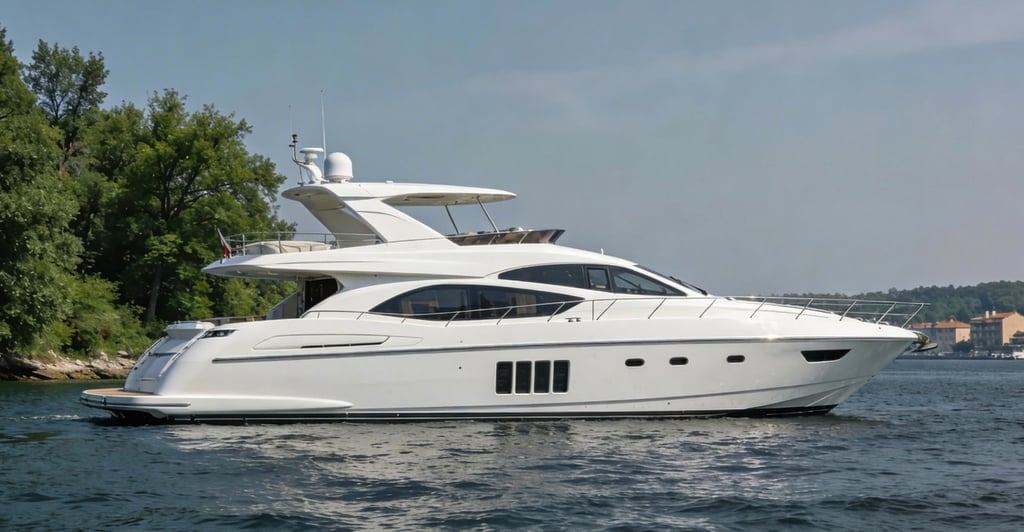
Lisbon from the Sea
A voyage along the Tagus through five centuries of empire, discovery, and the monuments that still watch over the water’s edge.
SLY
3/20/20268 min read
Imagine approaching Lisbon the way Vasco da Gama’s sailors once left it — by water. The Tagus opens wide before you, its mouth nearly 15 kilometres across, and from the deck of a boat the whole history of the city reveals itself in a single breathtaking panorama: ivory towers, golden monasteries, triumphal arches and the distant silhouette of a castle perched on seven hills. No bus, no tram, no walking tour can offer what the river gives you for free. This is how Lisbon was always meant to be seen.
— CHAPTER I —
A City Born from the Sea — Five Centuries of Maritime History


Long before Lisbon became a capital, the Tagus was its reason for existing. Phoenician traders settled its shores around 1200 BC, drawn by one of Europe’s finest natural harbours. The Romans called it Olisipo and built their forum on the hilltop where the Alfama still climbs today. But it was the Portuguese kings of the 15th and 16th centuries who would transform this rivermouth city into the nerve centre of a global empire.
In 1415, King João I launched the conquest of Ceuta from the Tagus docks, marking the first step of the Age of Discovery. Over the following century, ships bearing the cross of the Order of Christ slipped past the Belém promontory into open ocean, returning laden with spices from India, gold from West Africa, and the geographical outlines of an entirely new world. At its peak, Lisbon controlled the most lucrative trading routes on the planet, and the wealth that flowed in reshaped the riverfront in stone.
◆ A Timeline of Maritime Glory
1497
Vasco da Gama departs from Belém’s shoreline, inaugurating the sea route to India. The Torre de Belém would be built shortly after on the exact spot to mark the achievement.
1502
King Manuel I commissions the Mosteiro dos Jerónimos — funded directly by a tax on spices — as a monument to Portugal’s maritime triumphs.
1755
The Great Earthquake and tsunami devastate Lisbon. The Marquis of Pombal rebuilds the entire lower city, creating the Baixa and the grand Praça do Comércio — opened directly onto the river — to project power and modernity to the world.
1960
The Padrão dos Descobrimentos is permanently inaugurated on the 500th anniversary of Henry the Navigator’s death, facing the river, as if still waiting for the next fleet to return.
Today those same waters flow past monuments that have barely changed since they were built. And the best seat to take them all in remains exactly where it has always been: on the water itself.
“The sea that separates is the same sea that unites — the Tagus has been Lisbon’s mirror, its highway, its identity for three thousand years.”
— The Portuguese maritime tradition
— CHAPTER II —
The Waterfront Monuments — What You’ll See from the Deck


Sailing from central Lisbon westward toward Belém, the shore unfolds like a chapter of history with each nautical mile. Here are the landmarks that define the skyline from the river — and what they meant to the people who built them.
01 BAIXA · 1755
Praça do Comércio — The Triumphal Gateway to Portugal
Once called Terreiro do Paço (the Palace Yard), this immense square was deliberately opened onto the Tagus with no riverbank barrier between the water and the cobblestones. King José I’s equestrian statue stands at its centre, but the real power is architectural: a triumphal yellow arch flanked by colonnaded wings that frame the river like a stage set. Foreign merchants and ambassadors arrived here by boat, stepping off their vessels directly into the symbolic heart of the Portuguese empire. The effect — a city presenting itself to the ocean — still hits hard from the water.
02 BELÉM · 1519
Torre de Belém — Sentinel of the Discoveries
Built in pure Manueline style — a distinctly Portuguese Gothic idiom decorated with maritime motifs, armillary spheres, and twisted rope in stone — the Torre de Belém was constructed on a small island in the middle of the Tagus to defend the harbour and ceremonially mark the departure point of the great voyages. From the water, as your boat draws level with it, you understand immediately why it appears on every postcard: it floats, impossibly elegant, like a white chess piece placed at the exact boundary between the known world and the unknown.
03 CRISTO REI · 1959
Santuário Nacional de Cristo Rei — Guardian of the Tagus
The Cristo Rei sanctuary in Almada, inaugurated in 1959, stands as a 110-meter-tall symbol of Portugal's post-World War II vow for peace, with its arms outstretched from a 75-meter pedestal overlooking the Tagus River and Lisbon's skyline near the 25 de Abril Bridge. Inspired by Rio's Christ the Redeemer, it offers yacht charter clients from M. Subtil Luxury Yachting unparalleled panoramic views, blending modern faith with the maritime heritage echoed in Belém's Jerónimos Monastery. Visitors reach it efficiently via a 10-minute ferry from Cais do Sodré to Cacilhas, followed by a short walk or shuttle, with €6 entry granting access to the sanctuary and 360° viewing platform daily from 9:30am to 7pm.
04 BELÉM · 1960
Padrão dos Descobrimentos — The Prow of History
Shaped like the prow of a caravel cutting into the river, the Monument to the Discoveries cannot be accidental. Designed by architect José Ângelo Cottinelli Telmo, it thrusts forward toward the water at an angle that makes it look perpetually about to sail. Henry the Navigator stands at the tip, holding a model ship. Behind him, in two sloping rows, the 33 key figures of the Age of Discovery: cartographers, navigators, missionaries, chroniclers. From the river, the monument reads as a whole — a stone ship frozen mid-departure — in a way that ground level simply cannot communicate.
→ Planning further explorations along the coast? Discover our complete guide to day trips from Lisbon by sea —
— CHAPTER III —
Choosing Your Cruise — A Practical Guide to the River
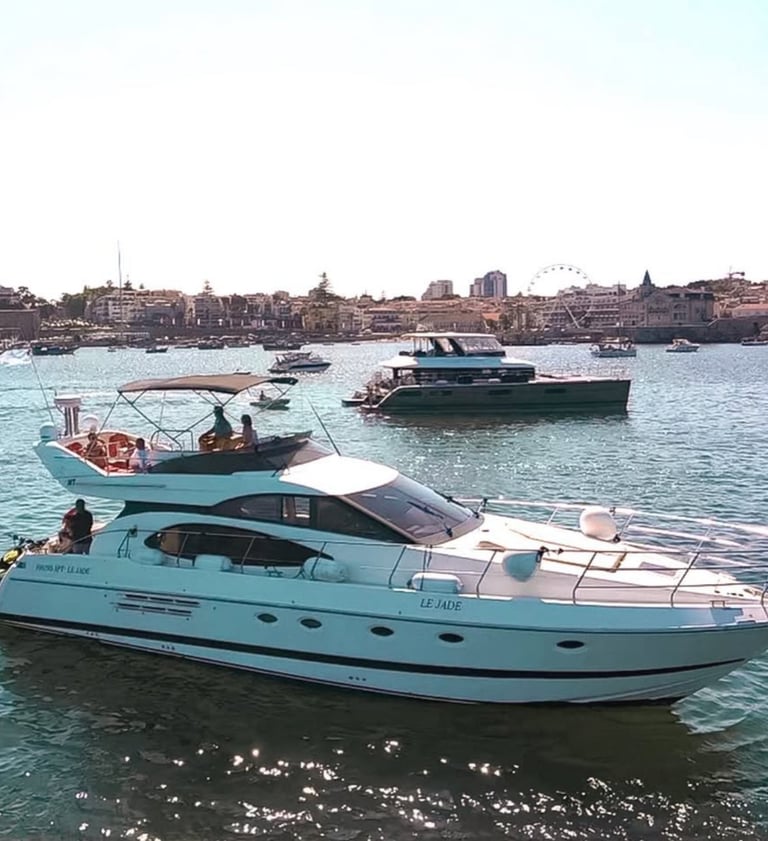
The Tagus offers several very different ways to experience the waterfront, depending on your pace, budget, and appetite for history. Here is what’s actually available, from the most accessible to the most immersive.
◆ At a Glance — Your Options on the Water
Classic River Cruise
3 hours — Cais do Sodré to Belém and back
Sunset Sailing
2.5 hours — Traditional wooden vessel, wine included
Kayak Tour
3 hours — Small groups, Belém riverside focus
Ferry (Cacilhas)
10 min — Budget option, stunning city silhouette views
Best Season
April–October · Golden hour: 7–9pm in summer
◆ Classic Cruises — The Full Panorama
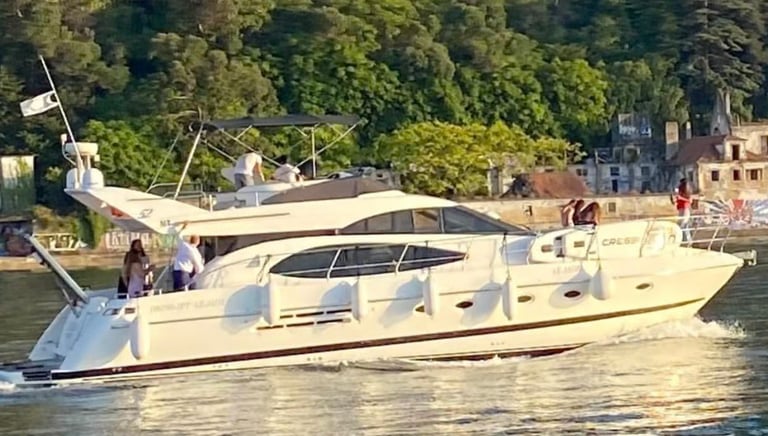
Several operators run daily departures from Terro do Paço and from Belém’s pier. The two-hour westbound itinerary — downriver from Cais do Sodré past the 25 de Abril Bridge toward Torre de Belém — covers the essential waterfront in sequence. Most cruises include an audio commentary in several languages. The best photo positions are on the starboard side heading west, port side on the return.
◆ Sunset Sailing — The Emotional Choice
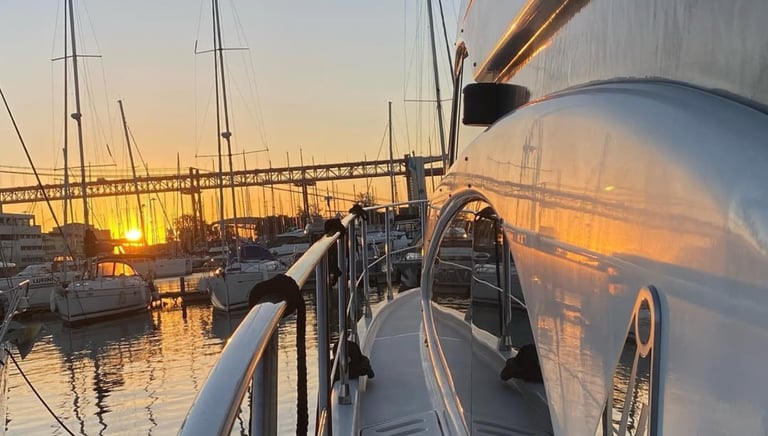
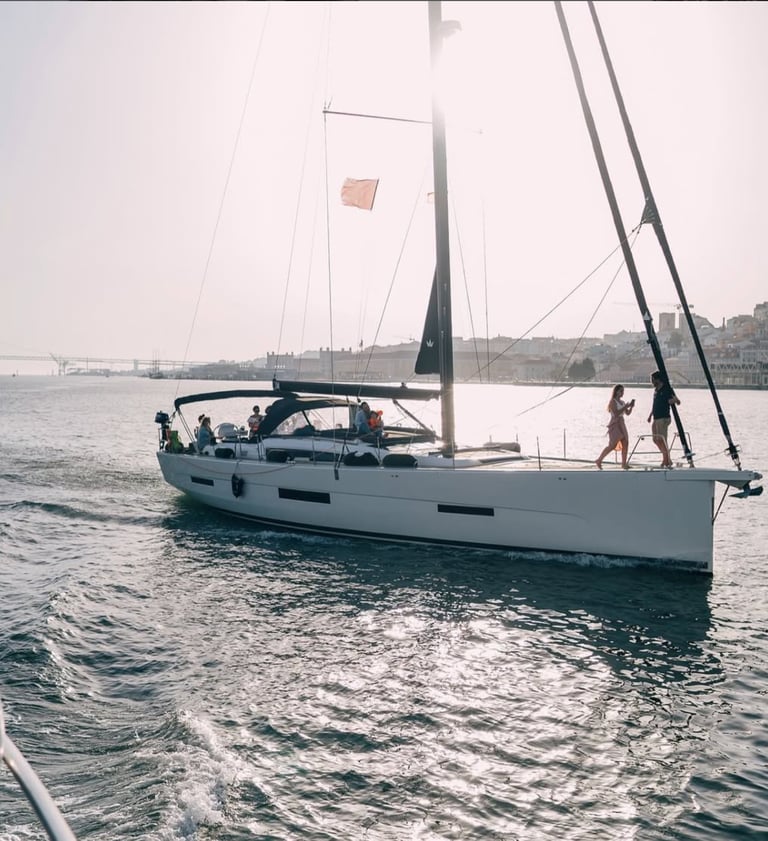
Between June and September, several operators run twilight cruises on traditional wooden varinos and smaller sailing vessels. Departing around 7pm, these two-and-a-half-hour tours catch the Jerónimos Monastery and Torre de Belém in the last warm light of the day. The combination of historical commentary, Portuguese wine, and a sun sliding behind the hills of Setúbal is the kind of experience that genuinely stays with you.
◆ The Ferry Secret — Local Knowledge
Lisbon’s best-kept maritime secret costs €1.50. The Cacilhas ferry from Cais do Sodré crosses to the south bank in ten minutes, and the return journey — approaching Lisbon as the afternoon light turns the city pink and gold — is one of the most spectacular urban views in Europe. No reservation needed. No tourist surcharge. Just buy a rechargeable Navegante card and join the commuters.


— CHAPTER IV —
Practical Tips for the Perfect Maritime Visit


Go early or go at dusk — never mid-afternoon
The light on the Tagus is extraordinary at golden hour. Mid-afternoon sun flattens the stone of the monuments and makes photography frustrating. The first cruises of the day (around 10am) offer soft morning light and smaller crowds; sunset cruises offer drama and colour.
01
Sit on the correct side of the boat
On westbound (Belém-direction) trips, take a starboard seat for the best views of the monuments. The northern bank — where all the historic buildings stand — is on your right side heading west. Coming back eastward, move to the port (left) side.
02
The wind on the Tagus is real — bring a layer
Even in July and August, the Tagus estuary generates its own wind, the nortada, which can make an open deck considerably cooler than the city behind you. A light jacket lives in every Lisbonite’s bag from May to October.
03
Combine the cruise with Belém on land
Many operators allow a stop in Belém — disembark, spend two to three hours visiting the Jerónimos Monastery and Torre de Belém on foot, then board a return boat. You get both perspectives: the monument from the water, and the river view from the tower itself.
04
Book sunset cruises 48 hours in advance in high season
July and August sunset sailings sell out consistently. Morning cruises and the Cacilhas ferry need no advance booking. For the smaller traditional-vessel tours (maximum 12 passengers), book at least two days ahead year-round.
05
Follow and Book with SLY for the best experiences in Lisbon
We are building a real community around the Portuguese sea, don't miss the chance to be part of it.
06
— FAQ —
Most recurent questions
Is it possible to see the Torre de Belém from a standard river cruise?
Yes — all westbound river cruises departing from central Lisbon pass within close range of the Torre de Belém. Most tours slow down or pause near the tower to allow photography. The best views come from boats running the full Cais do Sodré to Belém route rather than shorter harbour loops.
How long is the boat ride from Lisbon city centre to Belém?
On a tourist cruise, approximately 45–50 minutes one way, depending on the operator and the number of commentary stops. On a regular river taxi or commuter boat, the same stretch takes around 25–30 minutes. By contrast, the Cacilhas ferry crosses the river in under 10 minutes but heads south, not west — a different experience entirely.
What is the best time of year to visit Lisbon by sea?
Late spring (May–June) and early autumn (September–October) offer the ideal combination of reliable weather, warm light, and manageable tourist numbers. July and August are peak season — excellent weather but more crowded boats. Winter river cruises operate on weekends and can be genuinely atmospheric, especially on clear days when the water reflects the winter sky.
What is the best time of year to visit Lisbon by sea?
Late spring (May–June) and early autumn (September–October) offer the ideal combination of reliable weather, warm light, and manageable tourist numbers. July and August are peak season — excellent weather but more crowded boats. Winter river cruises operate on weekends and can be genuinely atmospheric, especially on clear days when the water reflects the winter sky.
Is a river cruise suitable for children?
Generally yes — the Tagus is a calm, wide river with no significant swells on standard cruise routes. Most operators accommodate children and strollers. Kayak tours are typically recommended for ages 12 and up. The Cacilhas ferry is ideal for families: short, inexpensive, and with outdoor deck space that children enjoy.
Ready to Set Sail?
Book your Tagus sunset cruise and let five centuries of history unfold before you from the water — the way Lisbon was always meant to be seen.